
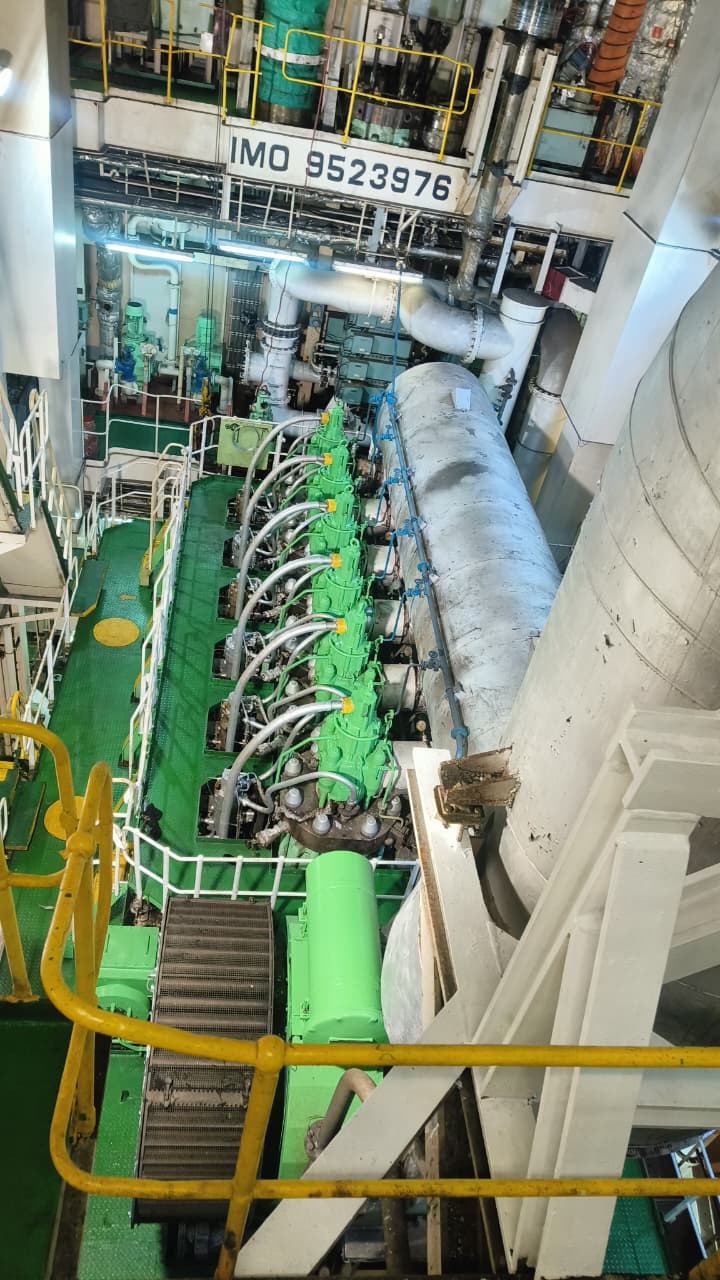
Engine overhauling on a marine vessel is a job where the condition of the components matters more than simply replacing parts according to a maintenance schedule. In our experience, we find that two engines of the same model can require entirely unique levels of work once we open them up.
At RA Power Solutions, we carry out engine overhauling services with attention to the actual condition of the engine components. We inspect, measure, repair, machine, and restore components according to the applicable OEM tolerances and the operating condition of the engine.
We may carry out the work during scheduled drydock maintenance or, where the engine condition and access permit, perform selected repair operations in situ. The objective is to establish the actual condition of the engine before deciding what needs to be repaired or replaced.
What Is Included in Marine Engine Overhauling?
A proper overhaul starts with dismantling and inspection. We do not consider an engine overhauled simply because worn parts have been replaced.
Depending on the engine type and the scope of work, we inspect:
- Crankshaft journals and crankpins
- Main and crankpin bearings
- Connecting rods
- Crossheads and crosshead bearings
- Cylinder liners
- Pistons and piston rings
- Cylinder heads
- Exhaust valves and valve seats
- Camshaft and camshaft bearings
- Gear trains
- Fuel injection components
- Engine foundation and holding-down arrangements
- Lubrication system components
- Cooling system components
Measurements are recorded against the applicable OEM dimensions. We specifically check for ovality, taper, wear, surface condition and dimensional deviation rather than relying only on visual inspection.
Crankshaft Inspection and Repair During Engine Overhaul
The crankshaft is one of the components we pay particular attention to during an overhaul.
Crankpin and main journal measurements are taken at multiple positions to establish the amount of wear, ovality and taper. We also inspect the fillet areas because damage or cracking in the fillet radius can have serious consequences.
Where the journal condition permits, we may carry out grinding to an approved undersize. The final undersize is selected based on the measured condition of the journal and the OEM regrind limits.
After grinding, the journal surface finish is checked. The required Ra surface finish must be achieved because the journal operates with hydrodynamic lubrication against the bearing surface.
We also check:
- Journal diameter
- Ovality
- Taper
- Fillet radius
- Surface finish
- Journal alignment where required
- Oil holes and oil-hole edges
- Evidence of scoring, overheating or wiping
If the crankshaft can be restored within the manufacturer's permitted dimensions, repair can often avoid the cost and lead time associated with replacement.
Main and Crankpin Bearing Inspection
Bearing condition gives us useful information about what has been happening inside the engine.
During an overhaul, we inspect main bearings and crankpin bearings for signs of:
- Babbitt wiping
- Fatigue cracking
- Local overheating
- Edge loading
- Foreign-particle damage
- Incorrect bearing clearance
- Uneven contact
- Copper or intermediate-layer exposure
Bearing clearances are checked against the engine manufacturer's specified values. We do not select a bearing size simply from its nominal designation.
Where a crankshaft has been ground to an approved undersize, the corresponding undersize bearing shells have to match the final journal diameter and specified running clearance.
Incorrect clearance can affect oil-film formation and lead to excessive bearing temperature or accelerated wear.
 |
 |
| Rebuilding power from the inside out: a complete engine overhaul. |
Connecting Rod and Big-End Inspection
Connecting rods are checked for dimensional condition, alignment and damage around the big-end and small-end areas.
The big-end bearing housing and bearing seating surfaces are inspected carefully. We also examine the connecting-rod bolts and associated components according to the engine manufacturer's overhaul procedure.
If a big-end has suffered from bearing failure, we investigate the cause before simply installing another bearing. A damaged or distorted bearing housing can cause the replacement bearing to run incorrectly.
Cylinder Liner and Piston Inspection
Cylinder liners are inspected for wear pattern, scoring, corrosion and dimensional changes.
We measure the liner at different heights and angular positions to establish wear, taper and ovality. This is particularly important on engines that have accumulated substantial running hours.
Pistons are inspected for:
- Crown condition
- Ring grooves
- Piston-ring condition
- Cracks
- Carbon deposits
- Signs of abnormal combustion
The piston rings are checked for condition and end clearance according to the applicable OEM specifications.
When liner wear is outside the permitted limits, the correct repair or replacement decision should be based on the measured condition rather than on appearance alone.
Cylinder Head and Valve Work
Cylinder heads are inspected for cracks, leakage and deterioration around the valve seats and combustion area.
Exhaust valves and inlet valves are checked for condition, seating and dimensional wear. Valve seats may require machining or replacement depending on their condition.
During overhaul work, we also look for signs of:
- Valve-seat recession
- Burning
- Poor valve seating
- Deposits
- Cracks around the combustion chamber
- Cooling-water leakage
The valve seating condition has a direct effect on combustion and component temperatures, so this part of the overhaul should not be treated as a routine cleaning exercise.
Engine Bearing Rebabbitting and Machining
In some cases, an engine bearing can be restored rather than replaced.
We undertake inspection, removal of damaged bearing material, babbitt removal and rebabbitting, machining and final dimensional inspection where technically suitable.
The bearing is machined to the required dimensions after considering the crankshaft journal size, bearing housing dimensions and specified clearance.
For older engines where original bearing shells are difficult to source, repair and rebabbitting can provide an alternative, provided the bearing design and condition make this technically acceptable.
In-Situ Engine Repair
Not every crankshaft repair requires removal of the crankshaft from the vessel.
Where access and the extent of damage allow, certain crankshaft repairs can be performed in situ. This can be particularly useful when vessel downtime is restricted.
In-situ crankshaft grinding involves setting up the grinding equipment directly around the crankshaft and restoring the affected journal to the required diameter and surface finish.
Before deciding on in-situ grinding, we assess:
- Available working clearance
- Journal damage
- Required reduction in diameter
- OEM regrind limits
- Fillet condition
- Accessibility
- Bearing removal arrangements
- Required final bearing clearance
The final decision should be based on measurement and engineering assessment, not simply on whether the grinding machine can physically be installed.
Drydock Overhaul vs. In-Situ Repair
The repair approach depends heavily on the vessel's operating schedule.
During a planned drydock, there is normally more opportunity to dismantle components, remove bearings, inspect the crankcase and carry out dimensional checks.
In an emergency repair, the situation is different. Vessel downtime can be measured in hours rather than days. In such cases, we focus first on identifying the damaged component and establishing whether it can be repaired without removing the complete engine or crankshaft.
For vessels operating under classification requirements, repair documentation and inspection records may also be required depending on the nature of the repair and the vessel's class.
Where applicable, the repair is carried out with reference to the requirements of classification societies such as DNV, ABS and Lloyd's Register, as well as the engine manufacturer's specifications.
Dimensional Inspection After Overhaul
Measurement is one of the most important parts of the engine overhaul.
After machining or component restoration, we verify the dimensions again. Typical checks include:
The final measurements form an important part of the overhaul record.
Why Accurate Bearing Clearance Matters
We have seen bearing problems develop after an overhaul because we paid attention to component replacement but not enough to the final clearance.
The crankshaft journal and bearing work together as a hydrodynamic bearing system. During operation, the lubricating oil film separates the surfaces.
If the clearance is outside the specified range, the oil-film behaviour may change. Excessive clearance can affect oil pressure and film formation, while insufficient clearance can restrict the oil film and increase the risk of overheating and seizure.
For this reason, we check the final bearing clearance against the applicable engine manufacturer's specification after completing the crankshaft and bearing work.
Engine Overhauling for Different Marine Engines
The overhaul procedure varies according to engine design, manufacturer, cylinder arrangement and operating application.
We work with components associated with marine diesel engines from various manufacturers. The inspection and repair procedure is adapted to the particular engine model rather than applying one generic overhaul procedure to every engine.
The engine model, running hours, previous repair history, measured dimensions and available OEM information are considered before determining the repair scope.
Documentation and Final Inspection
At the end of the overhaul, dimensional records are important for future maintenance.
We recommend maintaining records of:
- Original measured dimensions
- Final machined dimensions
- Bearing clearances
- Crankshaft undersize, where applicable
- Surface-finish measurements
- Component inspection findings
- Repaired or replaced components
- Final inspection results
These records help the ship's technical team compare future measurements and identify changes in component condition over time.
Engine Overhauling Services by RA Power Solutions
Our approach to engine overhauling is based on inspection and measurement of the actual component condition.
Where a component is within repair limits, we assess whether it can be restored. Where the component is beyond the permitted dimensions or has structural damage, replacement may be necessary.
For crankshafts and bearings, we undertake inspection, dimensional measurement, grinding, polishing, bearing repair and rebabbitting as applicable to the component and engine condition.
For vessels with restricted repair windows, we also assess whether selected work can be completed in situ to reduce the amount of dismantling and vessel downtime.
The repair scope is ultimately determined by the measured condition of the engine and the applicable OEM tolerances and reconditioning limits.
Email: rajshahani@rapowersolutions.com | info@rapowersolutions.com Phone: +91 95826 47131 | +91 98100 12383